
Viewxavro
How We Help You Choose
The Complete Guide to Folding Treadmills and Home Storage
Bringing a treadmill into a residential apartment used to mean sacrificing an entire room to heavy steel and moving belts. Traditional gym machines sat bolted in place, gathering dust and dominating the floor plan long after the morning workout ended. Today, manufacturers build folding treadmills that offer the same motor strength and shock absorption as fixed units while shrinking down to a fraction of their footprint when idle.
Understanding how these machines operate helps you separate clever engineering from flimsy gimmicks. A folding treadmill relies on precise physics, sturdy hinges, and hydraulic assistance to let one person lift a hundred-kilogram deck with minimal effort. Knowing what to look for prevents buyer's remorse and keeps your living space functional.
How the Folding Mechanism Operates
The core of any space-saving treadmill is the pivot hinge connecting the running deck to the console uprights. This joint takes the brunt of the runner's weight, absorbing downward force with every stride. Engineers reinforce this pivot point with heavy-duty steel brackets and thick locking bolts to eliminate the wobble that plagued older folding models from a decade ago.
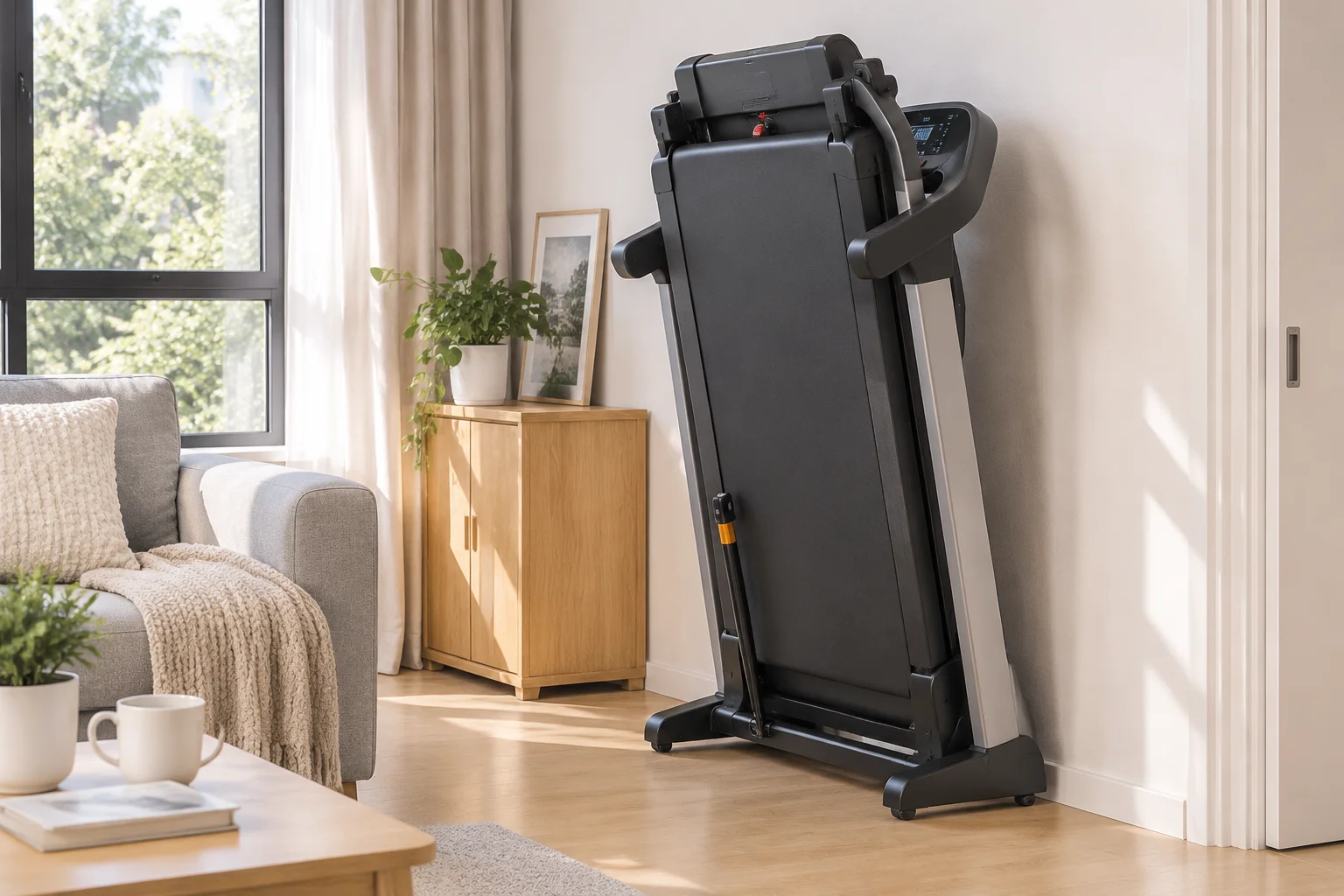
When you finish your run, you simply tilt the running deck upward toward the console until it reaches a near-vertical position. A mechanical latch clicks into place to secure the deck, preventing it from accidentally falling back down. Releasing the latch requires a simple press of a foot pedal or a gentle tug, giving you total control over the transition from active workout mode to compact storage.
The Role of Hydraulic Lift Assists
Lifting a heavy running deck by hand sounds like a chore that would strain your lower back. Modern folding treadmills solve this problem with hydraulic pistons, often called soft-drop systems. These gas-charged cylinders do the heavy lifting for you, working much like the trunk struts on a hatchback car.
When you lift the deck to store it, the hydraulic cylinder engages and locks the weight in the upright position. When you pull the release lever to set the treadmill up for your next run, the piston controls the descent. The running deck lowers slowly and silently to the floor all by itself, requiring zero physical strength to guide it downward and protecting your flooring from impact.
What Size and Weight to Expect
Weight matters immensely with folding treadmills because a heavier machine usually means better stability during a fast sprint. Most quality folding models weigh between seventy and one hundred kilograms. This heft keeps the unit from sliding across smooth wooden floors or vibrating violently when the motor ramps up to higher speeds.
In terms of physical dimensions, expect a running surface length of at least 130 centimeters and a width of 45 centimeters to accommodate a natural stride. When folded upright, the footprint shrinks dramatically, reducing the floor space requirement down to roughly eighty by eighty centimeters. You must always measure your ceiling height before buying, because the elevated console can easily clip low hanging lights or ceiling fans in smaller rooms.
Tips for Small Room Storage
- Measure your available floor space before ordering the machine
- Check doorway widths to ensure the boxed treadmill fits into your room
- Place a thick rubber mat underneath the folded unit to protect your floors
- Keep the folding latch area clean and free of dust or pet hair
- Avoid storing the treadmill in damp areas like unheated balconies
- Unplug the power cord completely when the machine rests in storage
Living with a folding treadmill in a compact apartment requires a thoughtful approach to layout. Push the folded unit against a solid wall rather than a hollow drywall partition to prevent accidental bumps from damaging your home. Keep the power cord neatly coiled and tied away from the moving parts so it never gets pinched when you lower the deck.
Regular maintenance ensures your folding mechanism stays smooth over the years. Apply a few drops of silicone lubricant to the pivot hinges every six months to stop any squeaking. Check the tightness of the frame bolts after the first month of heavy use, as the initial vibrations often settle the metal components into place.
Choosing the right folding treadmill transforms a cramped living area into a versatile personal gym. By respecting the physical dimensions, mastering the hydraulic lift assist, and keeping the frame locked safely when not in use, you get all the cardiovascular benefits of a commercial fitness club without losing your living room to a massive piece of machinery.
Our Research in Numbers
-
95
Over 50 models reviewed -
100
Thousands of satisfied readers -
51
100 percent independent testing -
72
Daily safety and size checks
Frequently Asked Questions
About us

Our People

Kateryna Boyko
Fitness Equipment Tester

Andrii Shevchenko
Lead Technical Writer
Our People

Ivan Melnyk
Home Gym Specialist

Dmytro Kovalenko
Oleksandr Bondarenko